

Why Employers Use Behavioural Assessments During Recruitment
If you've ever applied for a job and been asked to complete a behavioural assessment, you may have wondered why it's necessary. After all, you've already submitted your CV and attended an interview. Why do employers need another assessment? The answer is simple: employers aren't only looking for someone who has the right qualifications or experience. They're also looking for someone whose natural working style is a good fit for the role and the team.
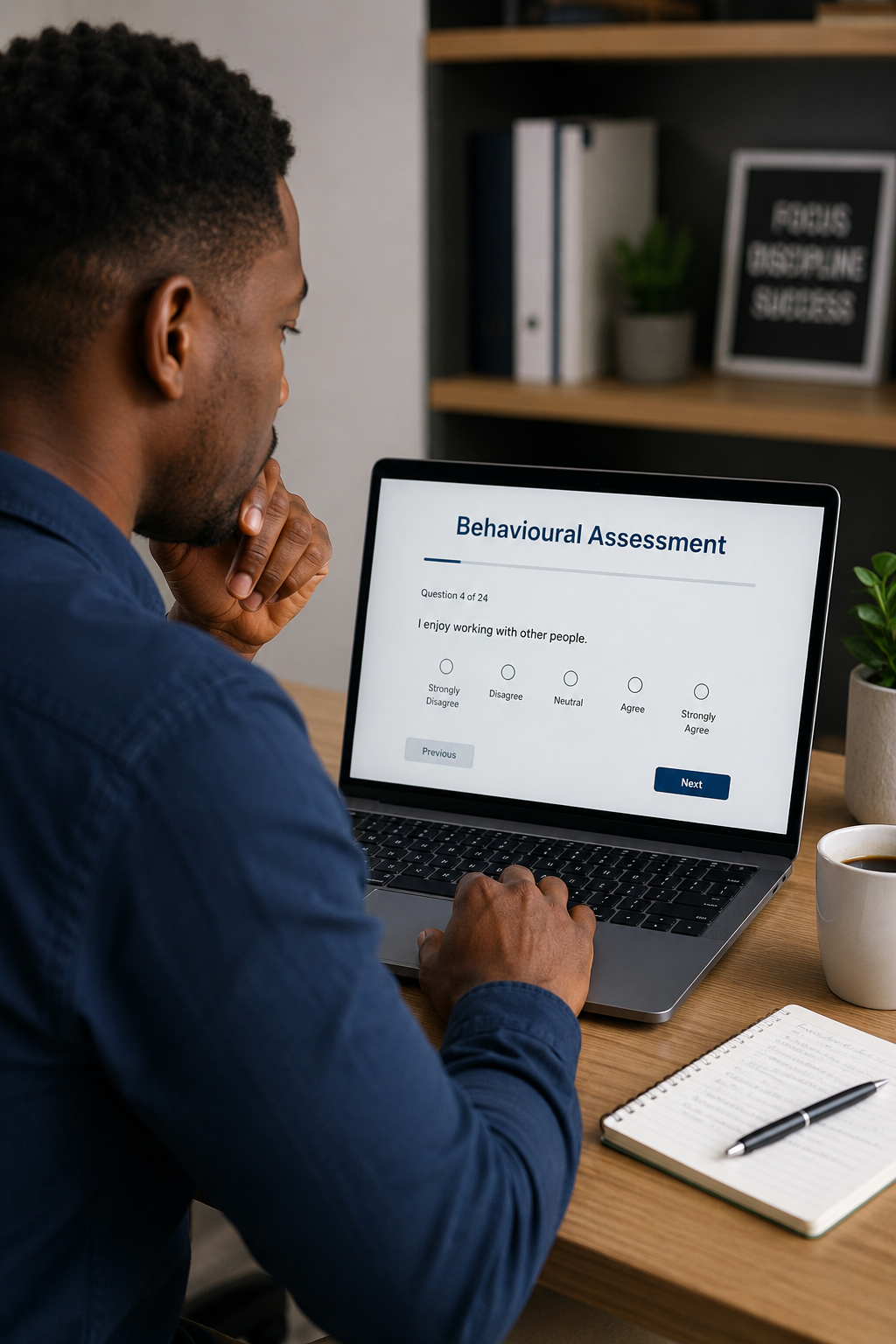
What Is a Behavioural Assessment?
A behavioural assessment is a questionnaire designed to help employers understand how you naturally think, communicate and behave in the workplace. Unlike technical tests, it doesn't measure what you know or how skilled you are. Instead, it provides insight into how you are likely to approach different work situations. For example, it may explore whether you enjoy working independently or as part of a team, how you respond to pressure, whether you prefer planning ahead or adapting as situations change, and how you communicate with others. There are no right or wrong personalities. Every individual has strengths, and different jobs require different behavioural traits.
Why Do Employers Use Them?
Hiring the wrong person can be expensive. Employers invest time and money into recruiting, onboarding and training new employees. They want to make informed hiring decisions that reduce staff turnover and improve workplace performance.
Behavioural assessments help employers look beyond a CV by providing a more complete picture of each candidate. Someone may have all the required qualifications but struggle in an environment that doesn't suit their personality. On the other hand, a candidate with slightly less experience may thrive because their behavioural style matches the role perfectly. These assessments also help employers build balanced teams. A successful workplace needs people with different strengths. Some employees naturally take charge and make quick decisions, while others are analytical, detail-oriented or excellent at building relationships. Understanding these differences helps employers create stronger, more effective teams.
What Are Employers Looking For?
Many candidates believe behavioural assessments are designed to find the "perfect" personality. This isn't true. Employers are simply looking for the best match between the candidate and the job.
For example, a maintenance planner may need to be highly organised, patient and detail-focused. A sales representative may need to be outgoing, persuasive and confident communicating with new people. A supervisor may need strong leadership skills, sound judgement and the ability to remain calm under pressure. The assessment helps employers determine whether your natural behavioural style aligns with the demands of the position.
Can You Fail a Behavioural Assessment?
In most cases, no.
Behavioural assessments are not exams with passing or failing scores. Instead, they compare your behavioural preferences with the requirements of a particular role.
You may be an excellent candidate but simply not the best fit for one specific position. That same assessment could indicate you're an outstanding fit for another role within the same company.
This is why it's important not to view the assessment as a test you need to "beat."

How Can You Prepare?
Although you can't study for a behavioural assessment like you would for a technical exam, there are still ways to prepare.
Get enough sleep before completing the assessment and make sure you're in a quiet environment where you won't be interrupted. Read each question carefully and answer based on how you usually behave rather than how you think you should behave.
Avoid overthinking your answers. Your first instinct is often the most accurate reflection of your natural working style. Most importantly, be consistent and truthful throughout the assessment.
Should You Try to Answer What You Think the Employer Wants?
One of the biggest mistakes candidates make is trying to second-guess the assessment.
Many people search online for the "correct" answers or intentionally change their responses to appear more confident, outgoing or organised. This approach usually backfires. Modern behavioural assessments are carefully designed to identify inconsistent or contradictory answers. If your responses don't reflect your natural behaviour, the results may appear unreliable. Even if you manage to present yourself as someone you're not, you could end up being hired for a role that doesn't suit you, leading to frustration, poor performance and job dissatisfaction. The best approach is always to answer honestly.
Behavioural assessments aren't designed to eliminate candidates - they're designed to help employers make better hiring decisions and place people in roles where they are most likely to succeed. Your skills, qualifications and experience will always matter, but employers also want to understand how you'll work with others, respond to challenges and contribute to the workplace. The next time you're invited to complete a behavioural assessment, don't see it as another obstacle. Instead, view it as an opportunity to show employers who you really are.
Being yourself is often your greatest advantage.
 Chat to Us
