

The Art of Passing Knowledge On: Are Experienced Artisans Teaching the Next Generation?
Experience is earned over years. Knowledge becomes valuable when it is shared. In mining and engineering, some of the most valuable knowledge in the workplace cannot be found in a textbook, training manual or instruction sheet. It comes from years of working with machinery, solving problems, dealing with unexpected breakdowns and learning what works – and sometimes what doesn't.
An experienced diesel mechanic knows the sounds an engine shouldn't make. A seasoned millwright can often recognise a developing mechanical problem before it becomes a major breakdown. An experienced electrician understands that sometimes the smallest detail can make the biggest difference. This kind of practical knowledge is built over time. But there is an important question worth asking: Are we doing enough to pass it on to the next generation of artisans?
Experience Shouldn't Leave Through the Workshop Door
Every industry depends on experienced people, but technical industries such as mining and engineering depend heavily on practical knowledge developed through years of hands-on work.
When an experienced artisan retires, changes careers or leaves a company, they take decades of accumulated experience with them.
That experience might include knowing how to approach a difficult repair, recognising early warning signs of equipment failure, understanding unusual operating conditions or knowing which mistakes to avoid.
Formal qualifications provide an essential foundation, but there is a difference between knowing how something is supposed to work and understanding how to deal with it when things don't go according to plan. If that knowledge is never shared, the next generation has to learn many of the same lessons from scratch.
Mentorship Is More Than Showing Someone How to Do a Job
Passing on knowledge doesn't mean simply giving a junior employee a task and expecting them to figure it out. Good mentorship involves explaining the reasoning behind a task, demonstrating the correct approach, allowing someone to practise under appropriate supervision and helping them understand where things can go wrong. It also means being patient when someone makes mistakes and recognising that learning takes time.
An experienced artisan who takes the time to explain why a particular procedure matters is doing more than teaching someone to complete a job. They are helping develop independent thinking, practical judgement and confidence. And importantly, mentorship is not about creating someone who simply copies the way you work. It is about helping them develop the skills to think, troubleshoot and make sound decisions for themselves.
The Next Generation Must Be Willing to Learn
Knowledge transfer is a two-way responsibility. You can have the most experienced artisan in the workshop, but if younger employees aren't prepared to listen, ask questions and put in the effort, valuable opportunities will be lost.
Newer artisans should understand that experience cannot be rushed. Being qualified doesn't mean knowing everything, and asking questions is not a weakness.
There is tremendous value in spending time alongside someone who has worked in the industry for 20 or 30 years. Pay attention to how they approach problems, how they prepare for a job and how they respond when something unexpected happens.
At the same time, younger workers bring their own strengths. New technologies, updated training and different ways of approaching problems can benefit even the most experienced teams. The best workplaces create an environment where both generations are willing to learn from one another.
Employers Have a Role to Play Too
Knowledge transfer shouldn't depend entirely on whether an experienced employee happens to feel like mentoring someone. Companies need to create opportunities for it to happen.
This could include:
- Pairing junior artisans with experienced employees on practical jobs.
- Creating structured mentorship and apprenticeship programmes.
- Allowing time for experienced workers to demonstrate techniques and explain procedures.
- Documenting important maintenance knowledge and lessons learned.
- Encouraging experienced employees to participate in training and skills development.
- Recognising employees who actively contribute to developing others.
There is also a business benefit. When knowledge is shared, teams become better equipped to handle challenges, develop internal skills and reduce their dependence on a handful of experienced individuals. A company that invests in developing its people is also investing in the future stability of its operations.
Who Will Take Your Place?
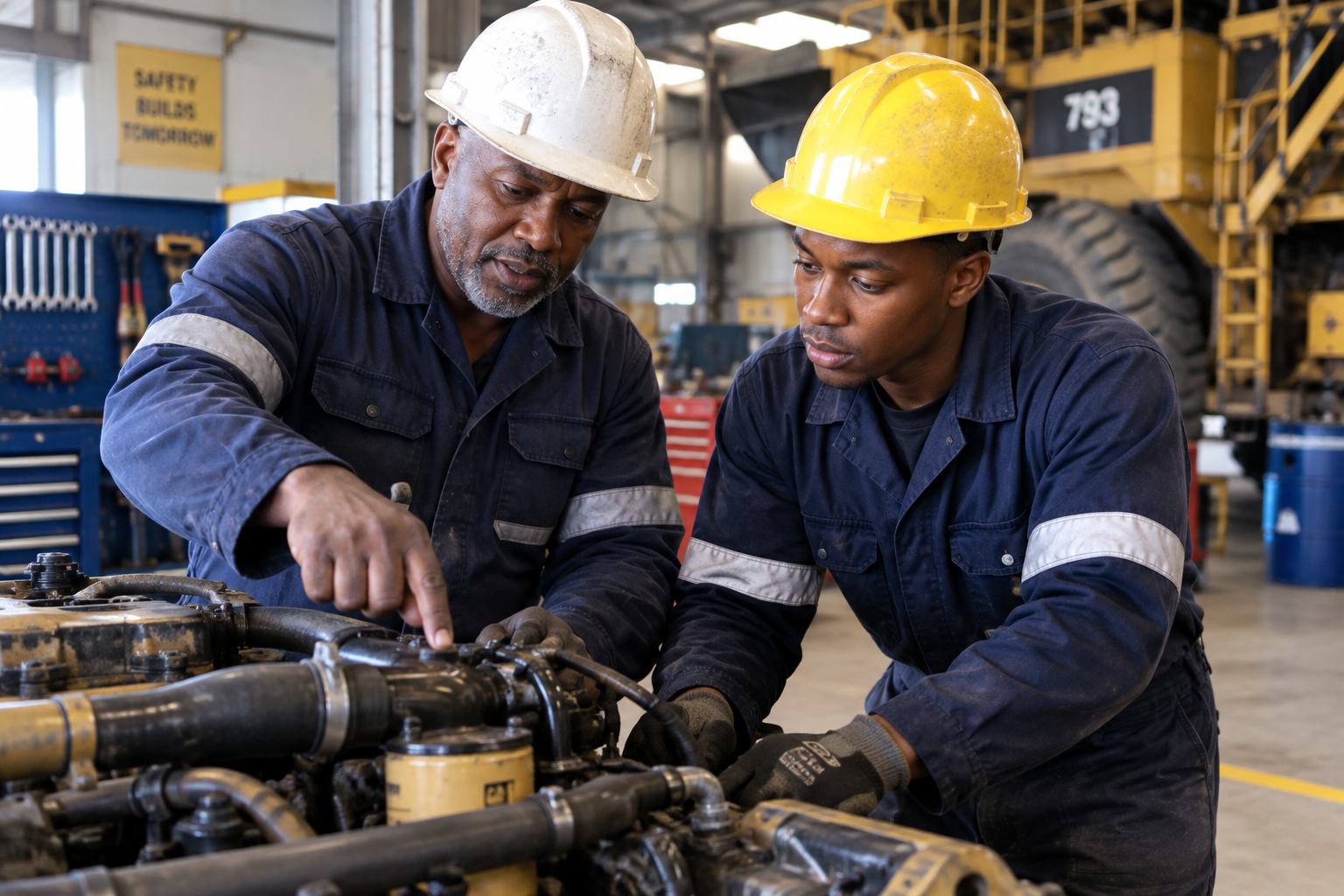
For experienced artisans, this is perhaps the most important question. After years of working in your trade, solving difficult problems and developing your skills, what happens to everything you've learned when you eventually leave the industry?
Your legacy doesn't have to be the machines you've repaired, the projects you've completed or the number of years you've worked.
It can also be the people you've helped develop along the way.
The apprentice who eventually becomes a qualified artisan. The junior mechanic who learns to diagnose a difficult fault because you took the time to explain it. The young electrician who becomes a confident professional because someone was willing to share their experience. These are achievements that continue long after you've left the workshop.
The Future of the Industry Depends on More Than Qualifications
Mining and engineering need qualified people, but they also need capable, confident and experienced workers who can apply their knowledge in real-world situations. Developing that workforce takes time, patience and cooperation between experienced artisans, younger employees and employers. Experience should never be treated as something that belongs exclusively to the person who earned it. It is an opportunity to help build the next generation.
Because the true measure of an experienced artisan isn't only what they can do themselves. It's also what they can teach someone else to do.
At Bilnor, we recognise that the strength of the mining and engineering industries lies in the people behind them. Investing in skills, experience and the development of future artisans is an investment in the industry's future.
 Chat to Us
