

A Practical Guide for Aspiring Tradesmen in South Africa
How to Get Your N1–N3 Certificates and Start an Apprenticeship
South Africa has always relied on skilled artisans to keep key industries running especially mining, engineering, manufacturing, and construction. Trades such as electricians, diesel mechanics, boilermakers, millwrights, and fitters are the backbone of operations across the country.
For young people who enjoy practical work and problem-solving, becoming a qualified artisan can be a highly rewarding career path. One of the most common starting points is obtaining N1–N3 engineering certificates and then completing an apprenticeship. This guide explains how aspiring tradesmen in South Africa can begin their journey and why employers and organisations like Bilnor Staffing Solutions place such importance on skills development.
What Are N1–N3 Certificates?
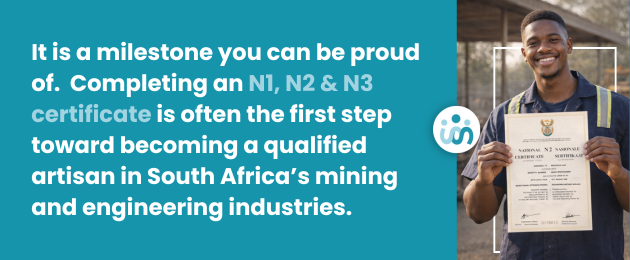
N1–N3 certificates are part of the National Accredited Technical Education Diploma (NATED) engineering programmes offered through TVET colleges and training institutions in South Africa.
These certificates provide the theoretical foundation for many technical trades. They cover core subjects such as:
- Engineering Mathematics
- Engineering Science
- Engineering Drawing
Trade-specific theory (such as electrical, diesel mechanic, fitting, or plumbing theory) Each level builds on the previous one.
Level | What It Means |
|---|---|
N1 | Entry-level theory |
N2 | Intermediate trade theory |
N3 | Advanced theory before apprenticeship |
How long does it take?
Each level typically takes about one trimester (around 12 weeks) to complete, and colleges often have three intakes per year: January, May, and September.
These qualifications are commonly taken by people pursuing careers such as:
- Electrician
- Diesel Mechanic
- Fitter and Turner
- Boilermaker
- Millwright
- Plumber
- Fabricator
Entry Requirements
The entry requirements are relatively accessible, which is why the trades remain one of the best career options for many South Africans.
Typical requirements include:
For N1:
- Grade 11 with Mathematics, or
- Grade 10 with technical subjects or maths and science.
For N2: N1 certificate or equivalent qualification.
For N3: N2 certificate or equivalent qualification.
Because of these flexible entry requirements, many people start their trade journey even if they did not complete matric, provided they have the necessary mathematics and technical background.
Where Can You Study?
Most students complete their N1–N3 at TVET Colleges, which are public institutions focused on vocational and technical training.
Some well-known examples include:
- False Bay TVET College
- College of Cape Town
- Tshwane North TVET College
- Ekurhuleni West TVET College
- Durban University of Technology (for further technical studies)
You can explore public colleges through the official government website:
Department of Higher Education TVET College Directory:
https://www.dhet.gov.za
Many private training providers also offer these courses, often with flexible study options or distance learning.
Choosing Your Trade
Before starting your studies, it’s important to decide which trade you want to pursue. Your choice will determine the subjects you study and the type of apprenticeship you apply for.
Some of the most in-demand trades in the mining and engineering industries include:
- Millwright
- Auto electricians
- Diesel mechanics / Instrument Technician
- Boilermakers
- Electrician
- Fitter & Turner
These trades are especially valuable in sectors such as:
- Mining
- Manufacturing
- Engineering workshops
- Construction / Civils
- Energy and infrastructure
What Is an Apprenticeship?
An apprenticeship is where you gain practical experience while working under qualified artisans.
During an apprenticeship you will:
- Work in a real industrial environment
- Learn hands-on technical skills
- Earn a stipend or salary
- Complete workplace training and logbooks
- Learn to work in a team
In many cases, apprenticeships last 3–4 years depending on the trade. You usually need N2 or N3 certificates before companies will consider you for an apprenticeship. Once the apprenticeship is complete, you will take a Trade Test to become a qualified artisan.

Where to Find Apprenticeships?
Apprenticeships are offered by many organisations, including:
Large companies - Mining houses, engineering firms, and manufacturers regularly recruit apprentices. Examples of mines include companies like:
- Anglo American (Sishen / Kolomela)
- Exxaro
- Sibanye-Stillwater
- Implats
- Gold Fields (South Deep)
These mines train people properly on big equipment and real production environments, which is why contractors often ask for them.
Government training bodies
- MERSETA – Manufacturing, Engineering and Related Services SETA
- Mining Qualifications Authority
These organisations support skills development and help regulate apprenticeship programmes.
Recruitment and staffing companies - Recruitment specialists like Bilnor Staffing Solutions work closely with mining and engineering employers to source qualified artisans and support workforce development.
Tips for Getting Your First Apprenticeship
Competition for apprenticeships can be high, so preparation matters.
Some practical tips include:
1. Complete at least N2 or N3
Most companies prefer candidates who have already completed their theory training.
2. Build a professional CV
Include:
- Your N1–N3 subjects
- Technical school projects
- Any workshop experience
- Machine experience: List the machines you have worked on and any relevant service or maintenance experience (e.g., 100-hour, 200-hour, or 500-hour services).
3. Apply early
Many apprenticeship programmes open applications once per year - so plan ahead and apply early. Most apprenticeships in South Africa take around 3–4 years to complete. During this time apprentices gain thousands of hours of practical workplace experience before becoming eligible to take their official trade test and qualify as artisans.
Bilnor’s Commitment to Developing Skilled Workers
At Bilnor Staffing Solutions, the focus is not only on placing workers in jobs — it’s about building long-term careers in the mining and engineering industries.
Employers consistently look for candidates who are, Technically trained, Safety-conscious, Skilled in their trade and Committed to continuous learning. By encouraging young people to pursue N1–N3 engineering studies and apprenticeships, the industry can develop the next generation of skilled artisans who keep operations running efficiently. Supporting skills development is ultimately about creating opportunities — helping individuals build stable careers while strengthening the industries that power South Africa’s economy.
Becoming a qualified tradesman is not just a job — it is a profession built on expertise, discipline, and hands-on skill. For many South Africans, the journey starts with N1–N3 engineering certificates, followed by an apprenticeship and a trade test. It requires commitment and hard work, but the rewards can are a respected technical career, opportunities across industries, strong earning potential and the ability to work anywhere in the world. For anyone interested in working with their hands, solving technical problems, and building something meaningful, the trades remain one of the most powerful career paths available.
Try to remain with one company while you are learning and completing your apprenticeship. Employers often look for stability, and candidates who frequently change jobs (“job hoppers”) may be viewed less favourably. Becoming a qualified artisan can also open doors to expat opportunities (working outside your home country for a foreign employer or on international projects). Skilled artisans are currently in demand around the world, and those who develop strong skills and experience often have the flexibility to choose where they work.
That’s why it’s so important to keep learning, improving your skills, and gaining experience throughout your career.
 Chat to Us
